
My CladdingKing Cart
There are no more items in your cart

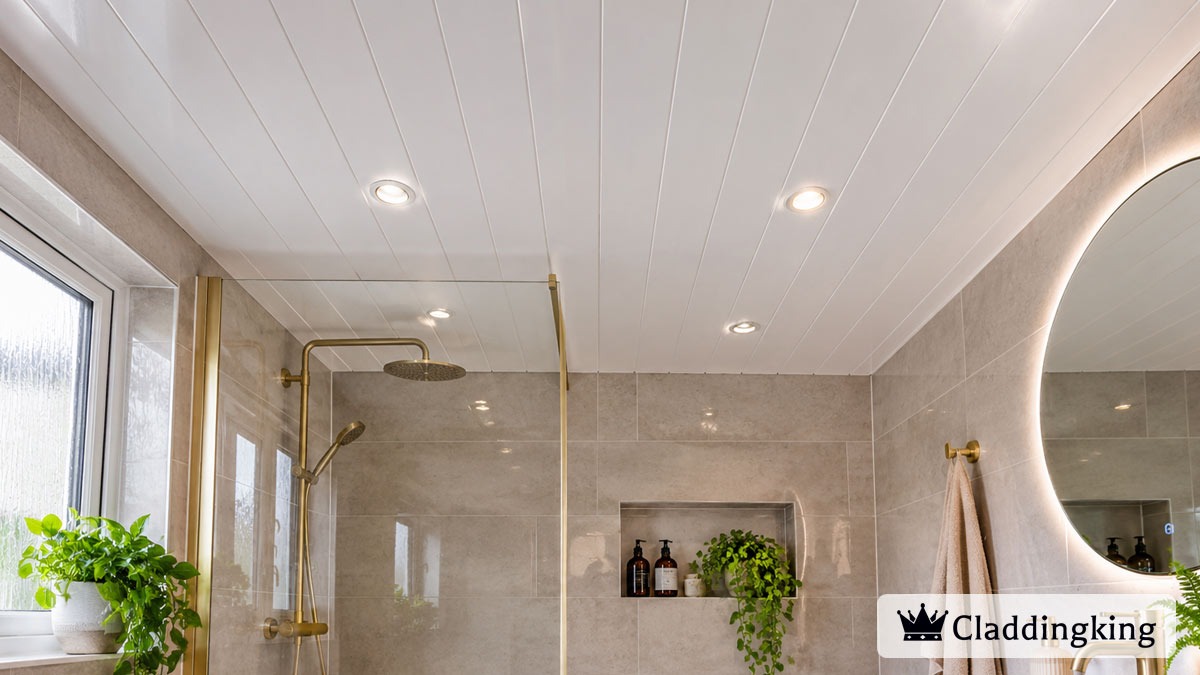
Refresh your space with our ceiling cladding, offering a clean, modern finish with minimal upkeep. It’s a simple alternative to traditional plastered ceilings that saves time and effort.
Perfect for bathrooms and kitchens, PVC ceiling cladding is moisture and mould resistant, making it hygienic, durable and easy to clean even in humid or high-use areas.
Available in a wide range of colours, textures and finishes, it can instantly improve a space while neatly covering cracks, stains and uneven surfaces.
Quick and straightforward to install, ceiling cladding provides a professional-looking finish without the mess, time or cost of re-plastering.
FAQS
1. Is ceiling cladding good for bathrooms?
Yes, ceiling cladding is one of the most popular finishes for bathrooms because it is waterproof and highly resistant to moisture. Unlike painted plaster ceilings, it won't peel, flake or absorb water vapour from showers and baths.
Bathroom ceiling cladding creates a clean, modern appearance that's easy to maintain.
2. How do you install ceiling cladding?
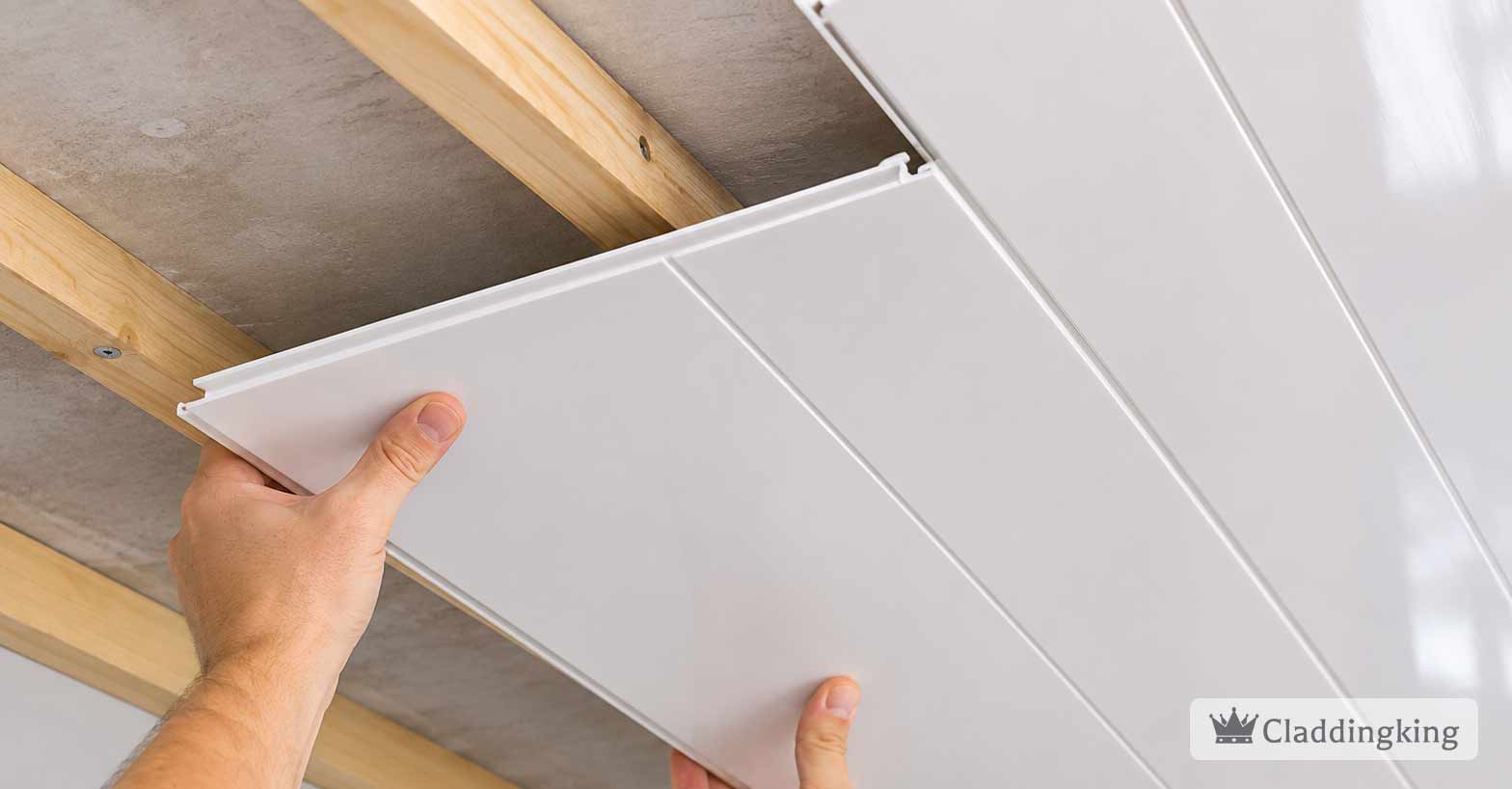
Use the tongue-and-groove design to easily slot each panel together. These panels can then be fixed using adhesive or secured to timber battens with screws, pins or staples.
Once the first panel is fitted, the remaining panels simply click into place to create a seamless finish.
3. How much does ceiling cladding cost?
The cost of ceiling cladding depends on the panel size, design and finish you choose. It’s more affordable than replastering a ceiling and then painting it. It can also reduce future maintenance costs because it doesn't require repainting.
4. What are the benefits of ceiling cladding?
Ceiling cladding offers a range of benefits, including waterproof protection, low maintenance and quick installation. The panels are easy to clean, resistant to mould and condensation, and can often be fitted directly over existing ceiling surfaces. They also provide a stylish, long-lasting finish without the need for regular painting or upkeep.
5. Is ceiling cladding cheaper than plastering?
Yes, ceiling cladding can be more cost-effective than plastering, as it installs quickly and eliminates the need for plastering, sanding, and painting.
6. Does ceiling cladding help prevent mould and condensation?
PVC ceiling cladding doesn't absorb moisture, making it far less susceptible to mould growth than painted plaster ceilings. When combined with good ventilation, it can help reduce the effects of condensation and keep ceilings looking cleaner for longer.
7. Can ceiling cladding be fitted over an existing ceiling?
Yes, it can often be installed directly over existing surfaces, including plasterboard, painted ceilings and some textured finishes, provided the surface is sound and secure.
8. How long does PVC ceiling cladding last?
Quality PVC ceiling cladding is designed to be durable and long-lasting. It resists moisture, stains, and everyday wear, maintaining its appearance with minimal maintenance
Most brands would offer a life span of 5 years and upwards if maintained correctly and to the manufacturers guidelines.
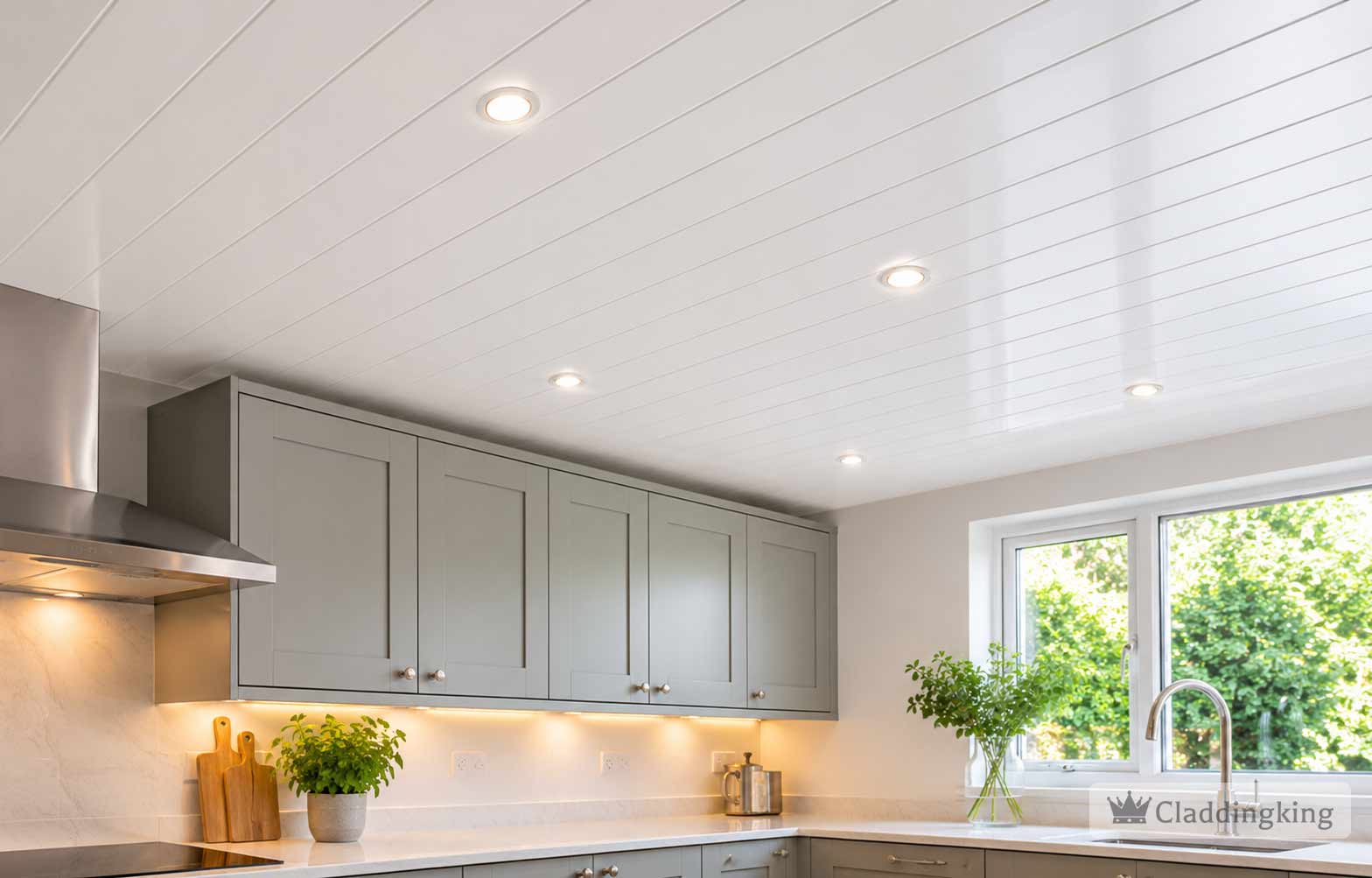
9. Can you install spotlights in ceiling cladding?
Yes, you can fit recessed spotlights and other ceiling lighting into ceiling cladding. The openings are typically cut before installation, and the appropriate fire-rated fittings should always be used where required. Always follow the lighting manufacturer's installation guidelines.
10. How do you clean ceiling cladding?
Most marks, dust and everyday dirt can be removed using a soft cloth and warm soapy water.
Comments (0)