
My CladdingKing Cart
There are no more items in your cart

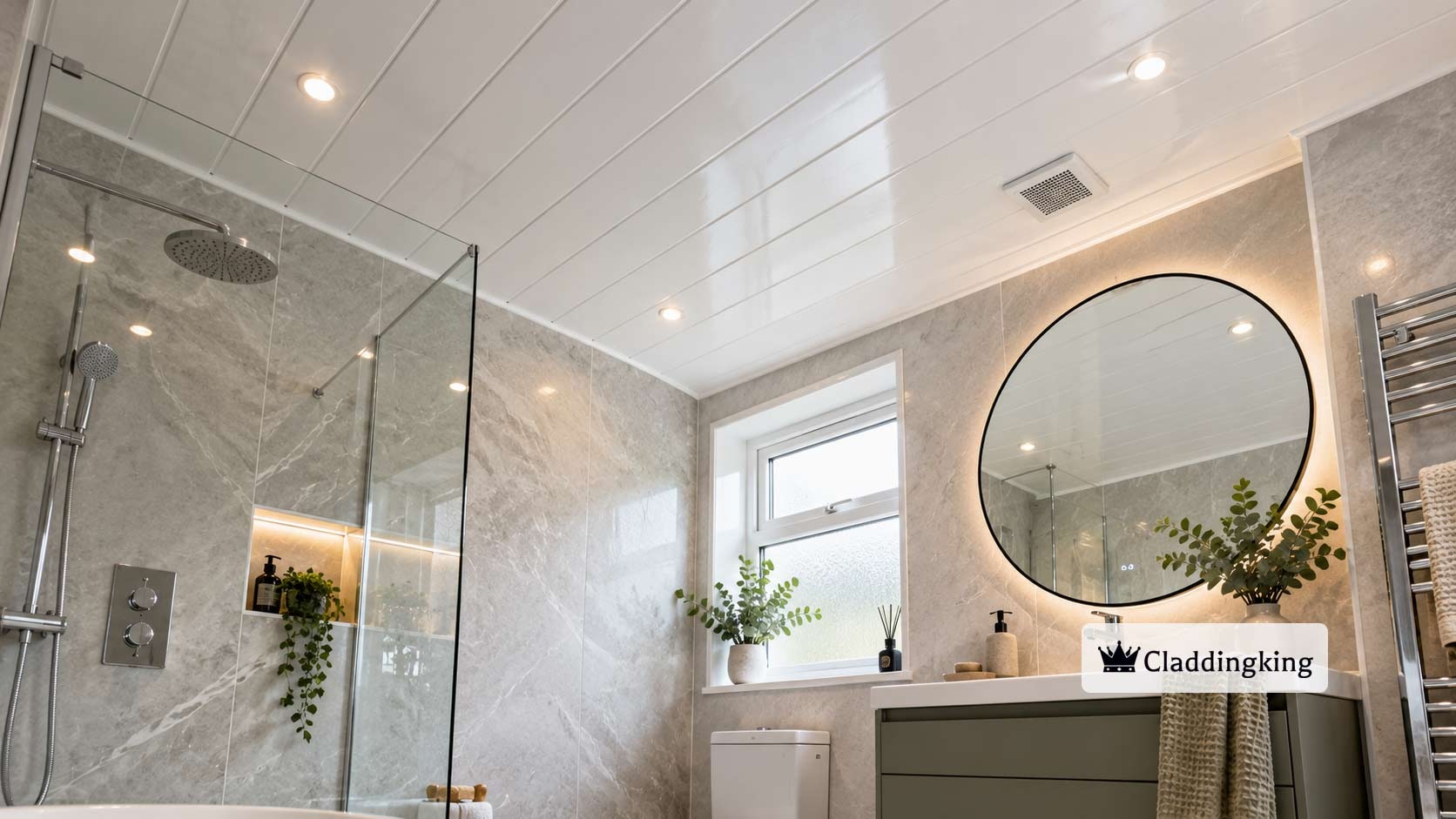
Can Bathroom Ceiling Cladding Help Prevent Mould?
Bathroom mould. One of the most annoying problems you can have in a bathroom. It comes back, you clean it, you paint over it and then, a few months later… bam, it’s back.
If you’ve watched mould return in your bathroom, you’ll know it’s not simply a decorating problem.
Bathrooms have to put up with a lot. They’re constantly exposed to steam and condensation, creating the perfect conditions for mould to return.
So, knowing there’s an alternative that can help create a water-resistant, easy-to-clean ceiling surface could save you a lot of time, effort and repeated repainting.
Yes, we’re talking about bathroom ceiling cladding! A practical, low-maintenance alternative to constantly repainting your ceiling.
Not many people realise that you don’t just have to clad the walls. Ceiling cladding is an option too, and it can look great as a seamless finish from wall to ceiling.
Why is mould so common on bathroom ceilings?
Mould is common in bathrooms because of the amount of moisture in the air.
Every time you take a hot steamy shower or enjoy a long soak in your bathtub, it releases water vapour into the air. This vapour rises and then produces water droplets (condensation) once it meets a cooler surface.
Unlike a steamed-up shower door, you aren’t going to wipe the ceiling down every time you use the hot water. So, moisture can linger on the surface, and over time, especially with poor ventilation, that damp can create the perfect conditions for mould to grow.
What does ceiling cladding do and what doesn't it do?
Ceiling cladding is suited to the humid conditions of a bathroom. It’s usually made with PVC, and this material is great for protecting against steam and condensation.
The panels slot together, meaning you don’t have any dirty grout lines to clean either. Also, the smooth finish alleviates the issues you can get with textured ceilings!
Remember though, cladding your ceiling is not a quick fix for any mould problems you may have. Check your extractor fan, and any potential leaks first.
Cladding works best alongside good ventilation!
What ceiling cladding does
- Provides a surface that's moisture-resistant
- Makes cleaning easier
- Reduces the need for repainting
What ceiling cladding doesn't do
- Replace effective ventilation
- Remove moisture from the air
- Fix leaks or water ingress
- Solve any damp or mould problems
Ceiling cladding vs a traditional painted ceiling
We’ve pulled together a handy comparison table, to help you decide whether ceiling cladding would be worthwhile in your bathroom.
| Type | Painted ceiling | PVC ceiling cladding |
|---|---|---|
| Condensation | Can be affected by repeated condensation | Moisture-resistant surface better suited to humid conditions |
| Surface | Painted/plastered surface | Non-porous PVC surface |
| Cleaning | May need care to avoid damaging paint | Easy to wipe clean and maintain |
| Repainting | May eventually be required | No routine repainting |
| Maintenance | Can require ongoing decorating | Generally low maintenance |
Why clad the ceiling if you're already cladding the walls?
You should consider cladding your bathroom ceiling too because it’s exposed to the same steam and condensation as the rest of your bathroom.
The ceiling is usually in the firing line the most!
You don't want your bathroom to feel unfinished. It makes sense to carry on the same finish, with the same benefits through to your ceiling. Then you’ll get a complete bathroom makeover that's consistent and easy to maintain - win-win!
But cladding your ceiling doesn't have to mean cladding your whole bathroom.
If you're working with a tighter budget or simply don't want the expense and disruption of a full bathroom renovation, ceiling cladding on its own can be a great option.
It’s a simple way to refresh a tired-looking bathroom, brighten up the space and give your ceiling a cleaner, more modern finish, without having to replace your existing walls or fixtures.
Where does ceiling cladding make the most sense?
Bathroom ceiling cladding can work well in these types of bathrooms:
- Bathrooms without windows as they rely more heavily on good ventilation to remove moisture.
- En-suites and shared family bathrooms as they tend to be used more frequently throughout the day, creating more steam and condensation.
- Bathrooms due for renovation as it's a great next step, creating a practical, low-maintenance solution.
Before installing ceiling cladding
Have you made the choice that ceiling cladding is right for you? Make sure you use this checklist before installation to make sure your bathroom ceiling:
- Check for leaks – Fix any plumbing or roof leaks before installing cladding.
- Check your extractor – Make sure it works effectively and is suitable for the size of your bathroom.
- Inspect the existing ceiling – Make sure the surface is sound and suitable for the cladding system. Repair any damage first.
- Deal with existing mould – Remove significant mould and address the underlying cause rather than simply covering it.
Is bathroom ceiling cladding worth it?
Yes, bathroom ceiling cladding is worth it if you have recurring moisture problems or regular cleaning is becoming a challenge.
If your bathroom is due for a refresh, or you’re already considering bathroom cladding, take a look at our range today. We’ve got a great selection of panels that not only provide a practical solution but also offer a stylish upgrade, helping to take your bathroom to the next level.
Shop today, or if you have any questions, get in touch with our team and we’ll be happy to help.
Comments (0)