
My CladdingKing Cart
There are no more items in your cart

7 Rooms in Your Home That Can Benefit From Acoustic Wall Panels
Our homes are becoming more open, stylish and multifunctional. We’re asking our rooms to do more for us, adapting to the way we work, relax, entertain, game and spend time with family and friends.
A lot of thought goes into the theme of the room, the decor choices and colour scheme. But there’s one thing that often gets overlooked, and that is how the room sounds.
Hard surfaces such as plasterboard walls, laminate flooring and large furniture-free spaces can create unwanted echoes and make rooms feel noisy.
A room that sounds harsh or echoey doesn't always feel as comfortable as it looks. Acoustic wall panels can help create a softer, more welcoming space while adding warmth, texture and character to your walls.
In this guide we’ll cover:
- Acoustic panels vs soundproofing
- What to consider before choosing your acoustic panels
- 7 rooms that can benefit from acoustic wall panels
Acoustic Panels vs Soundproofing
Before choosing panels, it is important to understand the differences between acoustic panels and soundproofing.
So what do they actually do?
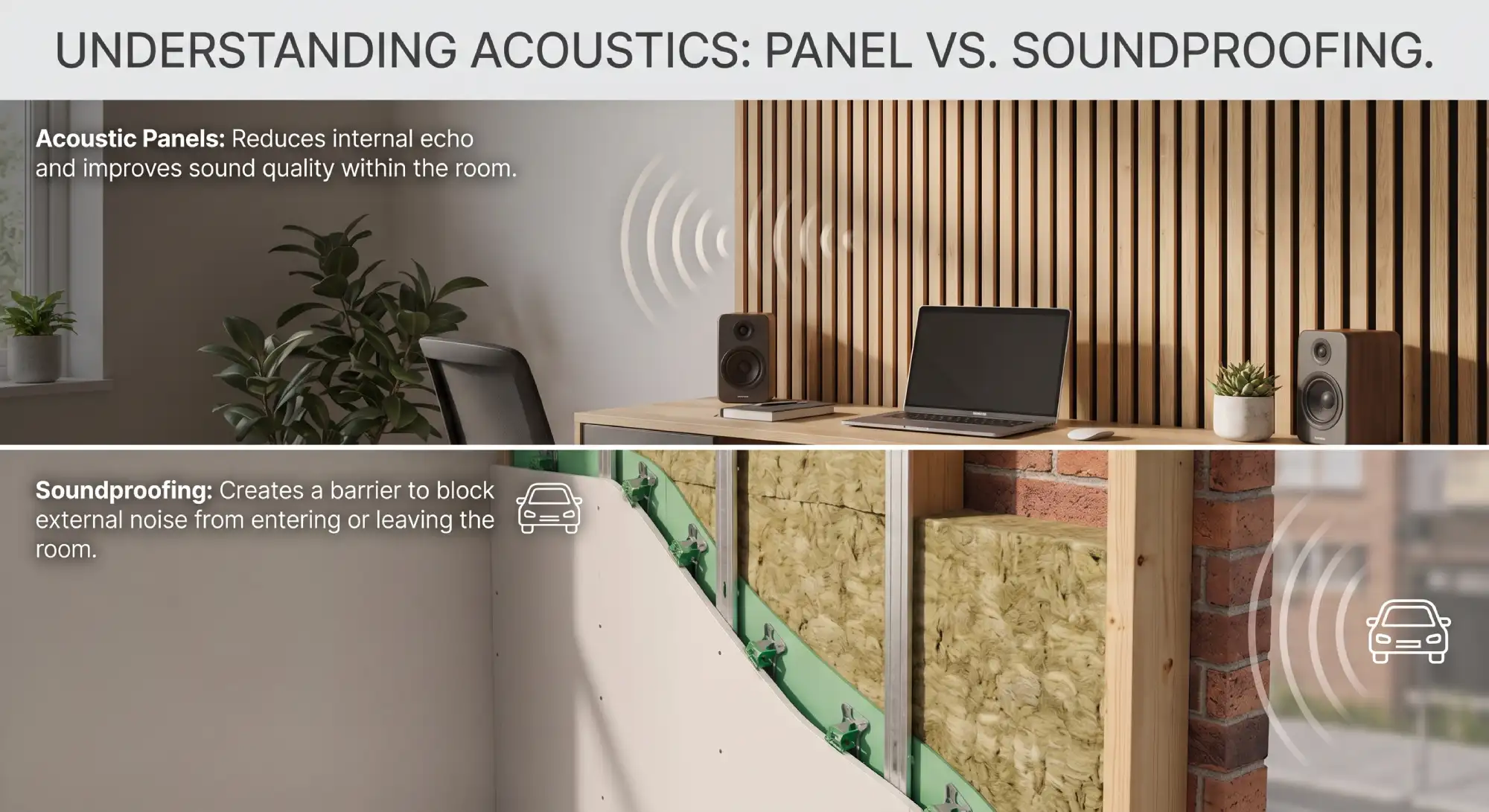
Acoustic Wall Panels Reduce Echo
Acoustic panels are designed to absorb sound energy inside a room and are ideal for improving how a room sounds.
They help reduce echoes, harsh sound reflections and the hollow feel of an empty room.
Soundproofing Helps Block Unwanted Noise
Soundproofing is different. It is designed to stop sound travelling between spaces. This typically involves additional wall construction, insulation, specialist acoustic membranes and extra wall mass.
Acoustic panels won't completely stop your neighbour hearing your TV or prevent outside traffic noise, but they can make a noticeable difference to how sound behaves within your room.
Before You Choose Your Acoustic Panels
Every room is different, so there isn't a one-size-fits-all approach to acoustic panelling.
Consider the size of the room, the wall you're working with, the amount of furniture and the type of flooring.
A large room with wooden or tiled floors and lots of empty wall space will generally have more sound bouncing around than a carpeted room filled with furniture and curtains.
Think about how much echo you want to reduce and where sound is most noticeable before deciding how much panelling you need.
You should also consider the visual effect. Full-height acoustic panelling can draw the eye upwards and make a room feel taller, while using panels across part of a wall can create a more defined feature without overwhelming the space.
So, Where in the Home Could You Benefit From Acoustic Panels?
Acoustic panels aren't just for recording studios or commercial spaces. They can work in all sorts of rooms around the home, helping to reduce unwanted echoes while adding warmth, texture and a stylish feature.
1. Living Rooms
Living rooms are one of the most popular spaces for acoustic wall panels.
Modern living rooms often feature wooden floors, TVs, large windows and open layouts. While these features create a stylish, spacious feel, they can also cause sound to bounce around the room, creating unwanted echoes.
Acoustic slat wall panels behind a TV, sofa or feature wall can help soften sound in the room while adding warmth, texture and a stylish finishing touch.
Before choosing where to install them, consider the rest of the room too. Hard flooring, large windows and minimal furniture can all contribute to sound bouncing around, while rugs, curtains and soft furnishings naturally absorb some sound. Think about how much echo you actually want to reduce before deciding how much wall space to cover.
Style recommendation:
For a stronger design statement, consider installing acoustic panels from floor to ceiling. Full-height panelling draws the eye upwards, helping the room feel taller while creating a striking feature wall.
Wood-effect acoustic panels also work particularly well in living spaces. Pair darker walnut tones with modern interiors or lighter oak finishes with Scandinavian-style décor.
For lighter, Scandinavian-inspired interiors, consider a natural oak-effect acoustic panel to add warmth and texture without overpowering the space.
2. Home Offices
The rise of hybrid working has changed how we use our homes. A spare bedroom or corner of a living space is now often a permanent workspace, making comfort and concentration more important.
Acoustic panels for home offices can help reduce distractions by reducing the amount of sound that bounces around the room. This can make it easier to concentrate during the working day and create a quieter, more comfortable environment for calls and meetings.
While acoustic panels help absorb sound within the room, it’s important to note that they don’t completely soundproof the space or prevent noise from travelling between rooms.
They can improve the sound quality of online meetings by reducing echoes, helping your voice sound clearer and more professional.
For video calls, placing an acoustic panel behind your desk can create a stylish backdrop while helping to soften sound. Alternatively, panels can be placed opposite your workstation or on the largest empty wall, where they can help reduce sound bouncing around the room.
The amount of furniture in your office can also affect how much acoustic treatment you need.
A room with a desk, shelving, curtains and soft furnishings may need less panelling than a large, sparsely furnished room with hard flooring and empty walls.
Recommended colours:
Neutral tones such as oak, soft grey, beige and black work well in modern home offices, creating a calm and professional feel without making the space feel too clinical.
Natural wood tones can add warmth, while darker shades can create a more dramatic backdrop for video calls. Consider choosing a slatted or textured finish to add visual interest to the walls without overwhelming the room.
3. Bedrooms
Bedrooms should feel calm and relaxing, but large empty walls can create unwanted echoes, especially in minimalist bedrooms.
Acoustic wall panels can help soften the sound while adding warmth, texture and depth to the room, making the space feel more comfortable and inviting.
This same approach is often used in hotels to create a cosy, considered feel, so why not bring that look into your own bedroom?
Installing panels behind the bed can create the effect of a statement headboard, turning a simple wall into a stylish focal point.
They also work particularly well behind a wall-mounted TV, helping to create a more finished look while adding texture to the space. This makes them a great choice if you enjoy watching TV from bed and want your bedroom to feel both practical and luxurious.
DIY tip:
Before you start, measure the wall carefully and plan how the panels will be positioned, particularly around sockets, switches or a wall-mounted TV.
Cut the panels to size as needed, then fix them to the wall using our recommended adhesive and installation method.
It's also worth considering the rest of the room before deciding how much panelling you need. Carpet, rugs, curtains and upholstered furniture can already help absorb sound, so a bedroom with plenty of soft furnishings may only need a single feature wall.
4. Dining Rooms
Dining rooms can become surprisingly noisy, especially with dining tables and wooden floors. These surfaces reflect sound rather than absorbing it.
Acoustic wall panels in dining rooms can help make the space feel more comfortable by reducing sound bouncing around the room, while adding texture, visual interest and a unique focal point to the space.
Design idea:
Use acoustic panels as a feature wall behind a dining table to help reduce sound bouncing around the room while adding texture and visual interest.
The VOX Linerio L-Line Mocca Slat Panel works particularly well here, with its wider slat design creating a warm, contemporary backdrop and distinctive focal point.
5. Open Plan Kitchens
Open plan living is a popular choice for most UK households. They make homes feel larger, brighter and help people feel more connected.
But these types of kitchens can sometimes feel echoey and noisy, with hard surfaces causing sound to bounce around the room. This can make a large space feel less warm and welcoming, particularly when several people are cooking, talking and socialising at the same time.
Acoustic wall panels can help soften the sound while adding warmth, texture and a stylish focal point. They can also be used to visually define different areas of an open-plan space, helping to create a sense of separation between the kitchen, dining and living areas without closing the space off.
DIY tip:
Before installing panels in a kitchen, consider how close they will be to areas exposed to splashes, steam and grease. Keep panelling away from the hob and sink where possible, and check our cleaning and installation guidance to make sure the panels are suitable for the location.
6. Hallways and Staircases
Hallways and staircases are often overlooked when it comes to acoustics, but their hard surfaces, narrow layouts and high ceilings can make sound bounce around more than you might expect.
Footsteps, voices and everyday household noise can become particularly noticeable in these spaces, especially in homes with open staircases and tall entrance halls.
Acoustic wall panels can help soften some of these sound reflections while adding warmth and texture to an otherwise functional area.
A vertical slat installation can also draw the eye upwards, making a hallway feel taller and creating a stylish first impression as you enter the home.
DIY tip:
Consider using acoustic panelling as a feature in a boot room or entrance area. A panelled section behind coat hooks or storage can create a defined zone for hanging coats and bags while adding texture and visual interest.
In busy family homes, where people are coming and going throughout the day, the acoustic benefits are an added bonus.
7. Entertainment and Creative Spaces
Dedicated spaces for hobbies and entertainment are becoming more popular, whether it's a gaming room, music room, creative studio or a garden room set up.
For anyone who enjoys playing guitar, gaming with friends, listening to music or creating content, the way sound behaves in the room can make a big difference to how enjoyable the space feels.
Acoustic panels can make smaller hobby spaces feel more comfortable while adding character and a clear design feature to the room.
A slatted acoustic wall behind a gaming setup, music equipment or seating area can become a feature in its own right while helping to create a more comfortable acoustic environment.
They can also work particularly well in garden rooms and sheds that have been transformed into dedicated spaces.
Styling tip:
Use acoustic panelling to create a feature wall behind your gaming setup, guitar or music equipment.
Darker tones can create a bold, immersive feel for gaming spaces, while natural wood finishes can add warmth to music rooms and garden studios.
In smaller spaces, keeping the panelling to one wall can create a strong focal point without making the room feel enclosed.
Acoustic Panels Are a Design Upgrade, Not Just a Sound Solution
The best acoustic wall panels combine performance and style.
From living rooms and bedrooms to home offices and entertainment spaces, acoustic panels can help create rooms that feel calmer, look more stylish and sound more comfortable.
If you're considering acoustic panels for your home, explore our range of acoustic wall panels to find a style that works for your chosen room today.
Comments (0)